
What Makes 12mm Chopped E Glass Fiber Ideal for GRC and Precast Applications?
Glass fiber plays a very different role than polypropylene in a concrete or cement-based mix, and 12mm chopped E glass fiber sits right at the size that works best for GRC (glass fiber reinforced concrete) panels, decorative precast elements, and specialty cladding applications. As a serious Glass Fiber Manufacturer, we chop this fiber to a precise 12mm length specifically because it strikes the right balance — long enough to provide real reinforcement value in thin GRC sections, short enough to keep the mix workable during spray-up or premix processes.
Unlike polypropylene, which relies purely on mechanical crack-bridging, E glass fiber brings genuine tensile strength to the table, which is exactly why architectural precast and GRC manufacturers lean on it so heavily for thin, lightweight panels that still need to hold up structurally.
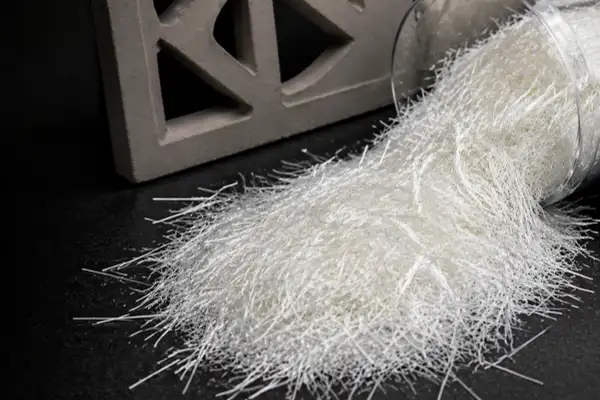
Product Overview
As an established E-Glass Fiber Manufacturer, we chop every batch of this fiber to a consistent 12mm length using precision cutting equipment, so dispersion stays uniform whether it’s used in a premix GRC formulation or a spray-up application. Being a dedicated Chopped Glass Fiber Manufacturer, we pay close attention to filament diameter and chop consistency, since uneven cutting is one of the more common causes of clumping in glass fiber-reinforced mixes.
Technical Specifications
| Glass Type | E Glass |
| Form | Chopped Strand |
| Application | Concrete |
| Tex / GSM | 300 g/m² |
| Sizing Type | Polyester |
| Fiber Length | 12 mm |
| Roll Width | 1000 mm |
| Color | White |
Key Features
This fiber’s 12mm chop length delivers meaningful tensile reinforcement in thin GRC panels without compromising the surface finish that architectural precast work often demands. The cement-compatible sizing on each filament improves bonding with the cementitious matrix, which directly affects flexural strength in the cured panel. It’s also lightweight relative to its strength contribution, which matters a great deal in architectural cladding, where reducing overall panel weight without sacrificing structural performance is often the whole point of choosing GRC in the first place.

Recommended Dosage
For standard GRC premix formulations, a fiber content of around 3–5% by weight of the total mix is typical, though this varies depending on panel thickness and the specific structural performance required. Spray-up GRC applications often run slightly higher fiber content for improved flexural strength. As always, exact dosage should be confirmed with our technical team based on the panel design and application.
Mixing Compatibility
Compatible with standard GRC premix formulations, cement-based renders, and specialty precast mixes. It mixes in during the standard batching process without requiring specialized equipment, though spray-up applications typically use dedicated GRC spray machinery for optimal fiber orientation and dispersion.

FAQ
What's the difference between E-glass fiber and alkali-resistant glass fiber?
E-glass fiber offers strong tensile properties but is better suited to applications with controlled alkali exposure, while AR glass fiber is specifically engineered to resist degradation in high-alkalinity cementitious environments over the long term.
Is 12mm chop length suitable for both premix and spray-up GRC?
Yes, this length works well across both processes, though spray-up applications may sometimes use slightly different chop lengths depending on the specific spray equipment and panel design.
Does chopped glass fiber affect the finish quality of decorative precast panels?
At recommended dosages and with proper mixing, surface finish quality remains high, which is why chopped E glass fiber remains a preferred choice for architectural GRC cladding.
Need technical guidance on fiber dosage for a specific GRC panel design? Reach out through our enquiry page or check the full range at fiberwellindia.com.