
What Range of Fiber Reinforcement Products
Do We Manufacture?
Choosing the right fiber for a concrete mix isn’t as simple as picking “polypropylene” and moving on. Fiber length, filament type, and material all change how the finished concrete behaves — which is exactly why, as a dedicated PP Fiber Manufacturer and Glass Fiber Manufacturer, we’ve built out a product range wide enough to cover almost every reinforcement need a contractor, precast unit, or infrastructure project could throw at us.
Below is a quick look at our four core product categories, each engineered for a distinct set of applications.
Polypropylene Fiber
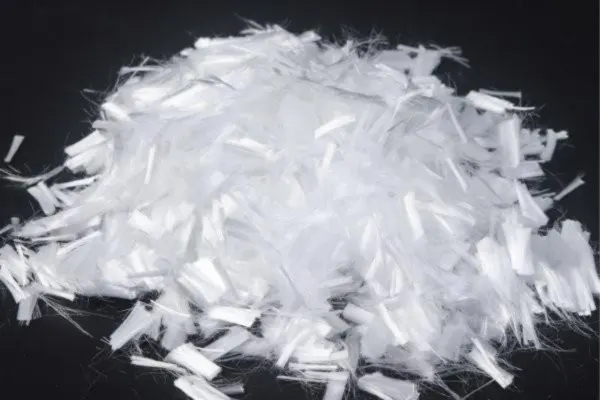
This is our largest and most widely used category, covering monofilament, multifilament, straight, and twisted fiber types in lengths ranging from 3mm right up to 12mm. As a PP Micro Fiber Manufacturer, our shorter fibers (3mm–8mm) are typically used for plastic shrinkage crack control in plaster, screeds, and thin slabs, while the longer variants (10mm–12mm) work well in structural applications needing higher tensile reinforcement. Our monofilament fibers offer smooth, consistent dispersion through the mix, while our twisted and multifilament options are designed for stronger mechanical bonding with the cement matrix. If your project calls for Virgin PP Micro Fiber, this category is where you’ll find fiber made entirely from fresh polypropylene, with none of the inconsistency that comes from recycled or blended raw material.
Glass Fiber
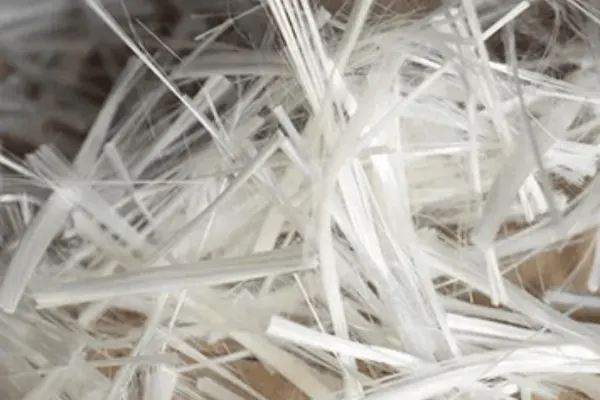
For applications where alkali resistance and dimensional stability matter more than flexibility, our chopped E-glass fiber range steps in. Available in 3mm, 6mm, 12mm, and 25mm lengths, this E-Glass Fiber Manufacturer grade product is widely used in GRC panels, cladding, and precast decorative elements. As a Chopped Glass Fiber Manufacturer, we cut every batch to precise, uniform lengths so mixing stays consistent and dispersion doesn’t clump — a problem that shows up more often than people expect with poorly processed glass fiber.
Polypropylene Mesh
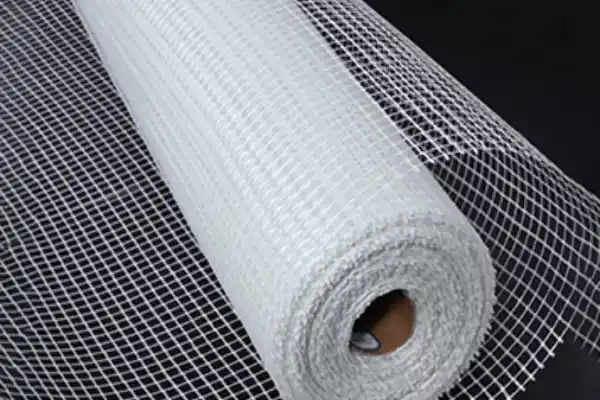
Our mesh range comes in multiple grid sizes — 8×8mm, 12×12mm, 15×15mm, and 20×20mm — designed for plastering, rendering, and wall crack-control applications where a woven or grid-style reinforcement works better than loose chopped fiber. As a Fiber Mesh Manufacturer, we supply this range to contractors handling both residential finishing work and larger commercial plastering jobs where surface crack resistance needs to be built in from the start.
Synthetic Fiber
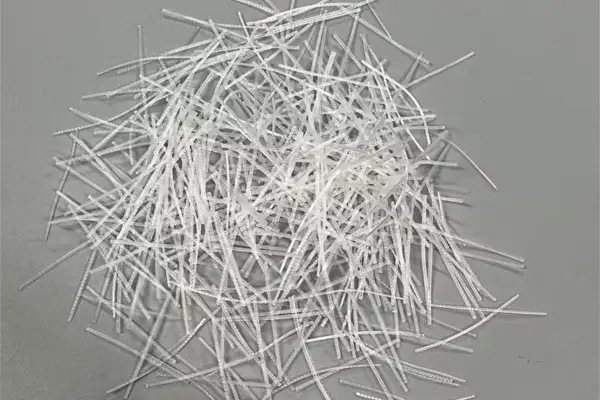
Rounding out the range, our monofilament synthetic fiber line — available in 6mm, 12mm, and 18mm lengths — serves as a Macro Synthetic Fiber Manufacturer solution for projects needing structural-grade reinforcement without the corrosion risk that comes with steel fiber or wire mesh. This category is a strong fit wherever engineers are looking to specify a genuine Concrete Reinforcement Fiber Manufacturer alternative to traditional welded mesh.
Why the Category You Choose Actually Matters
We get this question a lot: “can’t we just use one fiber for everything?” Technically, yes, but you’d be leaving performance on the table. A 3mm micro fiber won’t do much for structural crack resistance in a heavily loaded industrial floor, and a 12mm macro fiber is overkill — and harder to finish — in a thin decorative plaster coat. Our technical team is available to walk you through which category and length suits your specific mix design, load conditions, and finishing requirements, rather than leaving you to guess.
FAQ
Which fiber category is best for residential plaster work?
Shorter polypropylene micro fibers (3mm–6mm) or polypropylene mesh are generally best suited for plaster and rendering, since they control surface shrinkage cracks without affecting workability.
Is glass fiber suitable for structural concrete applications?
Glass fiber, particularly our alkali-resistant grade, is mainly used in GRC and precast decorative or cladding elements rather than primary structural reinforcement, where macro synthetic fiber is usually preferred.
Can polypropylene mesh replace chopped fiber in plastering applications?
In many cases yes, especially where a more uniform grid-style crack control is needed, though the right choice depends on the plaster thickness and finish requirement of the project.
Browse individual product specifications, dosage charts, and technical data sheets, or explore our complete catalog at fiberwellindia.com.