
Why Is Fiber Reinforcement Critical for Precast Concrete Manufacturing?
Precast concrete lives a different life than site-cast concrete from the very first hour. Panels and elements get demolded early, lifted, transported, and stacked — often well before the concrete has reached its full design strength.
That early handling window is exactly when precast elements are most vulnerable to cracking, and it’s exactly why fiber reinforcement has become such a standard part of precast production. As a Virgin PP Micro Fiber supplier and Glass Fiber Manufacturer, precast manufacturing is one of the industries where our fiber range gets used most intensively.
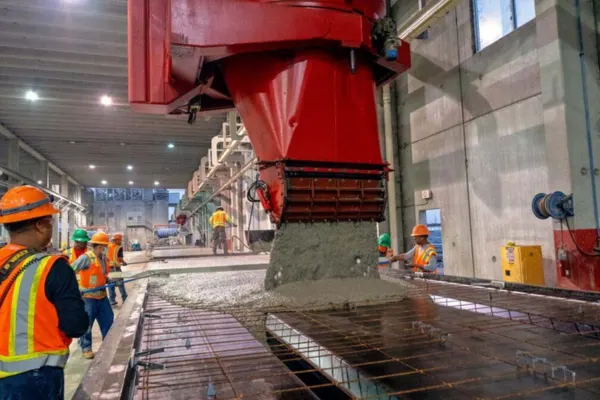
The Early-Age Vulnerability of Precast Elements
In contrast to a site-cast slab, which is allowed many days to set without any disturbance, the typical precast panel is demolded after just hours, and then lifted, moved, and often stacked under its own weight very soon afterward. This immediate stress, added to the rapid drying involved in the faster curing processes used in most precast facilities, creates conditions for plastic shrinkage cracks. One small hairline crack made during the demolding process can grow during moving, creating an unacceptable flaw.
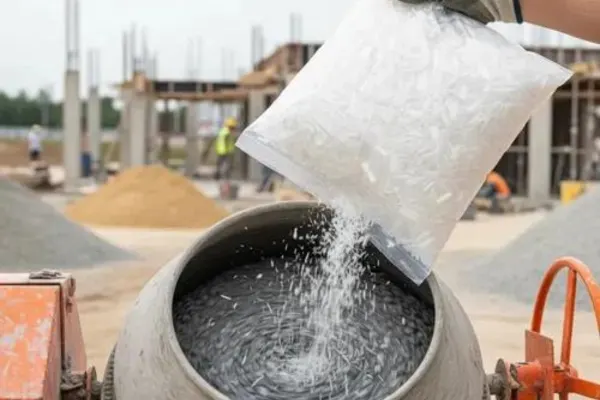
How Our Fiber Range Supports Precast Production
Our Virgin PP Micro Fiber products disperse evenly through precast mixes, controlling plastic shrinkage cracking during the critical early hours after casting when panels are most exposed to handling stress.
For GRC (glass fiber reinforced concrete) panels specifically, our E-Glass Fiber Manufacturer and Chopped Glass Fiber Manufacturer ranges bring genuine tensile strength into thin architectural panels, allowing precast manufacturers to produce lightweight cladding and decorative elements that hold up structurally despite their thin cross-section.
Where precast elements face sustained wet exposure or higher alkalinity conditions, our Alkali Resistant Glass Fiber range is specifically engineered to resist long-term degradation that standard E-glass fiber isn’t built to withstand.
Because fiber disperses through the entire mix rather than sitting at a fixed depth like conventional reinforcement mesh, it protects precast elements at exactly the surface zone where early-age cracking actually begins — something rebar or mesh alone doesn’t address.
Supporting Precast Manufacturers Across India
We work closely with precast manufacturers to recommend fiber type, length, and dosage suited to specific panel designs, whether that’s structural precast
elements, GRC architectural cladding, or utility precast products like drainage components and boundary elements. The technicians at our company know the rapid cycle times required by precast facilities, and our logistics and technical assistance services are built based on that knowledge rather than treating precast like a site cast operation.
FAQ
Why is fiber reinforcement more critical in precast than in site-cast concrete?
Precast elements are handled and demolded much earlier in the curing process, making them more vulnerable to early-age cracking, which fiber reinforcement helps control from the moment the concrete is cast.
Is glass fiber or polypropylene fiber better suited to precast production?
It depends on the application — glass fiber is typically used in thin GRC architectural panels needing tensile strength, while polypropylene micro fiber is widely used across general precast elements for shrinkage crack control.
Does fiber reinforcement affect the surface finish of precast panels?
At recommended dosages and proper mixing, fiber reinforcement doesn’t compromise surface finish quality, which is why it’s so widely used even in architectural and decorative precast applications.