
How Does Fiber Reinforcement Withstand the Demands of Manufacturing Facility Flooring?
Manufacturing floors deal with a combination of stresses that few other applications face all at once — heavy machinery vibration, constant equipment movement, chemical exposure from production processes, and in many cases, thermal cycling from industrial processes running nearby.
Plain concrete under this kind of sustained, varied stress tends to crack faster and deteriorate in ways that are difficult to predict with standard reinforcement alone. As a PP Fiber Manufacturer and Macro Synthetic Fiber Manufacturer, manufacturing facility flooring is exactly the kind of demanding, multi-stress environment our fiber range was developed to handle.
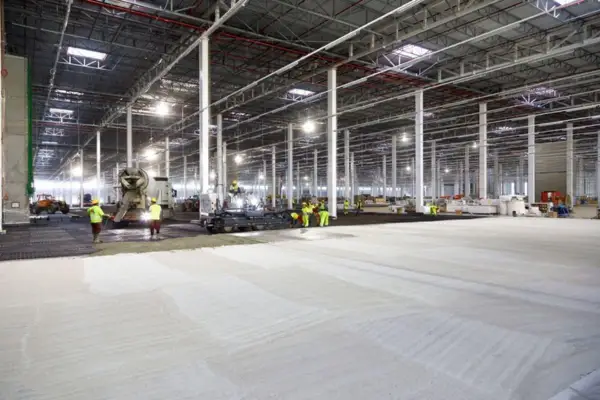
Why Manufacturing Floors Face Unusual Reinforcement Challenges
In contrast to the warehouse floor where most activity is performed using forklifts, factory floors have to face challenges such as constant machine vibrations, weight of machinery installation, and exposure to oils, chemicals, and other by-products which will eventually damage both the concrete and steel reinforcement. This combination accelerates both surface cracking and, where steel mesh is used, corrosion from chemical exposure reaching embedded reinforcement through even minor surface cracks. Manufacturing facilities also frequently need concrete that performs reliably from day one, since production downtime for floor repair is enormously costly in an active manufacturing environment.

How Our Fiber Range Supports Manufacturing Environments
Our PP Micro Fiber Manufacturer range controls plastic shrinkage cracking during the initial curing stage, giving manufacturing floors a stronger starting point before machinery and equipment loads even come into play. For the sustained vibration and heavy equipment loading typical of production floors, our Macro Synthetic Fiber Manufacturer and Concrete Reinforcement Fiber Manufacturer products add genuine structural toughness, helping the slab maintain integrity under continuous operational stress rather than developing the fatigue cracking that plain or minimally reinforced concrete eventually shows.
Because our entire fiber range is fully non-corrosive, it holds up considerably better than steel mesh in manufacturing environments where chemical spillage or process exposure is a routine part of daily operations — removing a genuine long-term degradation risk that many production facilities deal with as their steel-reinforced floors age.
Working With Manufacturing and Industrial Developers
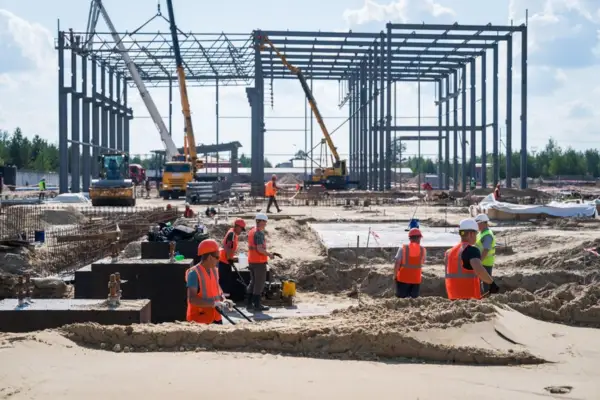
We supply fiber reinforcement to contractors and industrial developers building manufacturing facilities across a range of sectors, recommending dosage based on the specific equipment loads, vibration levels, and chemical exposure conditions unique to each production environment. Manufacturing clients often need technical documentation to support facility certifications and insurance requirements, and as an actual manufacturer, we’re well positioned to provide the consistent quality data that kind of documentation depends on.
FAQ
Does fiber reinforcement help with machinery vibration in manufacturing floors?
Yes, macro synthetic fiber in particular adds structural toughness that helps concrete resist the fatigue cracking associated with sustained equipment vibration and heavy machinery loads.
Is fiber-reinforced concrete suitable for facilities with chemical exposure?
Yes, since polypropylene and synthetic fiber are chemically inert, they hold up well in manufacturing environments with routine oil, chemical, or process byproduct exposure, unlike steel mesh, which can corrode under similar conditions.
Can fiber reinforcement reduce production downtime from floor repairs?
Yes, by reducing early cracking and long-term deterioration, fiber-reinforced flooring typically requires less frequent repair, helping minimize costly production interruptions.