
Where Does 3mm Monofilament Polypropylene Fiber Make the Biggest Difference?
At 3mm, we’re at the shortest end of our polypropylene fiber range — and honestly, this is the size most people don’t even realize is fiber reinforcement when they see the finished surface. It’s built for applications where fineness of finish matters as much as, or more than, crack resistance: skim coats, fine putty layers, tile adhesives, and ultra-thin repair work. As a PP Fiber Manufacturer, we get specific requests for this size from contractors working on decorative and finishing-grade applications where anything longer would simply show.
The idea here is almost counterintuitive — you want a fiber so short that nobody notices it’s there, yet still numerous enough per kilogram to intercept shrinkage cracks at a microscopic level before they ever reach the surface. That’s a very different job than the structural crack-bridging our 10mm and 12mm fibers handle.
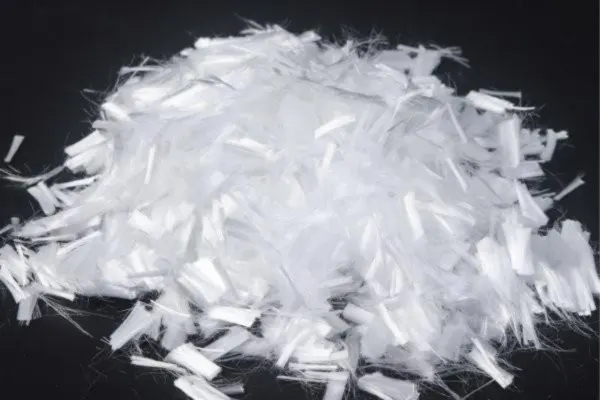
Product Overview
We manufacture this fiber from virgin PP micro fiber, holding tight tolerances on both length and diameter since at 3mm, even small manufacturing inconsistencies become disproportionately noticeable in the finished product. As a dedicated PP Micro Fiber Manufacturer, this is genuinely one of the more demanding products in our range to produce consistently, and it’s a size where cutting corners on raw material quality shows up almost immediately in the mix.
Technical Specifications
| Fiber Structure | Monofilament |
| Brand | Fiberwell |
| Alkali Resistance | Standard |
| Fiber Length | 3 mm |
| Tensile Strength | 450 MPa |
| Melting Point | 160°C |
| Size Classification | Macro |
| Density | 0.9 g/cm3 |
Key Features
This fiber’s short length means it blends into fine mortars, putties, and tile adhesives without any visible trace once the surface is finished. Because there are far more individual fiber strands per kilogram at this length compared to longer variants, dispersion is extremely fine and even, which actually improves micro-crack resistance in thin applications despite the reduced fiber length. It’s alkali-resistant and hydrophobic like the rest of our range, so there’s no concern about degradation in a cementitious or adhesive matrix over time.

Recommended Dosage
For fine putty, skim coats, and tile adhesive applications, 0.3–0.5 kg per cubic meter (or the equivalent per batch, for smaller mortar mixes) is usually sufficient. Because dispersion is so fine at this length, you genuinely don’t need much to see a meaningful improvement in surface crack resistance. Exact quantities are best confirmed with our technical team, since mix consistency varies quite a bit between putty, adhesive, and thin repair formulations.
Mixing Compatibility
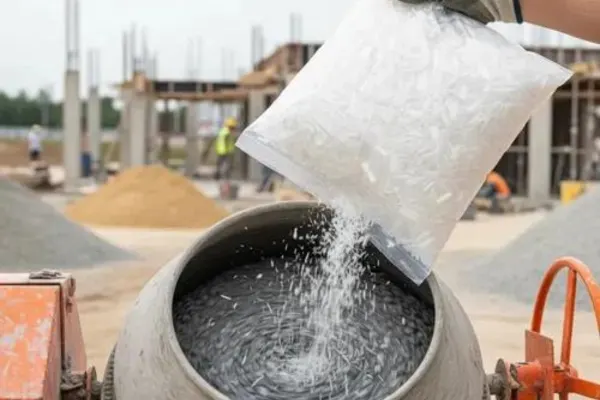
Works well in fine cement putties, tile adhesive formulations, and skim coat mortars. No special mixing equipment is needed, and it is compatible with common bonding agents, polymer modifiers, and water retention additives used in such finer applications.
FAQ
Can 3mm fiber be used in tile adhesive formulations?
Yes, it’s actually one of the more common applications for this fiber length, helping reduce shrinkage cracking in adhesive layers without affecting bond strength or workability.
Will this fiber be visible in a fine decorative finish?
No, at this length and recommended dosage, it stays completely embedded and isn’t visible once the surface is properly finished.
Is 3mm fiber a substitute for longer fibers in slab work?
No, it’s not intended for slab or structural applications — for those, longer monofilament or macro synthetic fiber is the right choice.
Looking for dosage guidance on a fine-finish or tile adhesive application? Reach out through our enquiry page or check the full range at fiberwellindia.com