
How Does Fiber Reinforcement Improve the Lifespan of Road and Highway Concrete?
Anyone who’s driven on an Indian highway during peak summer knows the story — smooth new pavement, and within a season or two, a network of surface cracks starts creeping across it. Road and highway concrete takes a beating unlike almost any other application: constant vehicle loading, temperature swings that expand and contract the slab daily, and shrinkage stress from the moment it’s poured. As a Macro Synthetic Fiber Manufacturer and PP Fiber Manufacturer, we’ve built our road and pavement fiber solutions specifically around these repeated stress conditions.
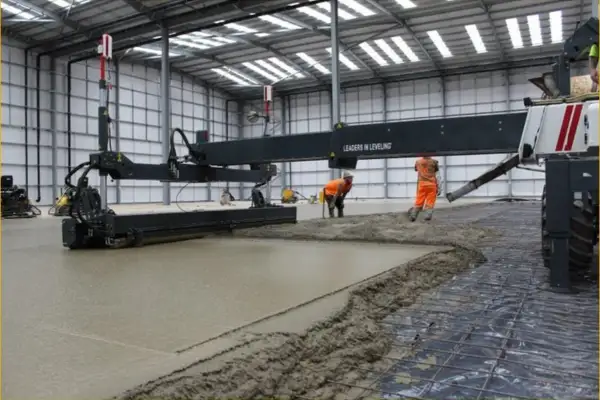
Why Plain Concrete Struggles on Roads and Highways
Shrinkage stress is applied to very large and uninterrupted areas in case of the pavement concrete since this type of concrete is laid in such form. The combination of thermal variations and cyclic fatigue loads causes early cracking of pavements that gradually expand due to the infiltration of water and subsequent freeze-thaw and moisture damage. Traditional joint spacing and dowel bars help manage some of this, but they don’t address the fine-grained shrinkage cracking that starts the whole deterioration process within the panel itself.

Where Fiber Reinforcement Fits In
Our PP Micro Fiber Manufacturer range tackles this at the earliest stage, dispersing through the pavement mix to control plastic shrinkage cracking during the critical first hours of curing, when highway pavement is most vulnerable. For the ongoing fatigue loading that highways deal with daily, our Macro Synthetic Fiber Manufacturer and Concrete Reinforcement Fiber Manufacturer products add genuine post-crack toughness, helping the pavement section maintain load transfer and structural integrity across joints and panel sections even after micro-cracking begins. This matters enormously for pavement life-cycle performance — a pavement that resists early cracking simply lasts longer before requiring resurfacing or major repair.
Being fully corrosion-resistant also means our fiber doesn’t introduce the long-term degradation risk that steel reinforcement can face in pavement applications exposed to de-icing salts, monsoon flooding, or general moisture penetration through surface cracks.
Supporting Road Contractors and Infrastructure Developers
Fiber reinforcement is frequently supplied by us for roads and highways, providing consultation to contractors and infrastructural developers regarding type and dosage of fibers according to traffic load, thickness of pavement, and climatic conditions of the area. Highway projects often specify structural documentation and consistent batch quality, and as an actual manufacturer — not a reseller — we’re positioned to support that level of technical accountability across large-volume orders.
FAQ
What type of fiber is best suited for highway pavement applications?
A combination is often used — PP micro fiber for early-age shrinkage control, alongside macro synthetic fiber for the sustained structural toughness needed to handle fatigue loading from continuous traffic.
Does fiber reinforcement reduce the need for pavement joints?
Fiber reinforcement doesn’t eliminate the need for standard joint spacing, but it does help control the fine cracking that occurs between joints, improving overall pavement performance.
How does fiber-reinforced pavement compare to plain concrete in terms of maintenance?
Fiber-reinforced pavement generally shows reduced early cracking and better long-term durability, which typically translates into lower resurfacing and repair frequency over the pavement’s service life.