
What Makes Fiber Reinforcement Essential for Industrial Flooring Projects?
Walk through any warehouse or factory floor after a few years of heavy use, and you’ll usually spot the same problems — cracked joints, spalled corners, and surface deterioration right where forklifts and machinery travel most. Industrial flooring takes a different kind of punishment than almost any other concrete application: constant point loading from equipment, repeated impact, and in many cases, chemical exposure on top of it all. As a PP Fiber Manufacturer and Macro Synthetic Fiber Manufacturer, industrial flooring is one of the sectors where our fiber reinforcement range gets put to the test most directly.
Why Industrial Floors Crack Faster Than Expected
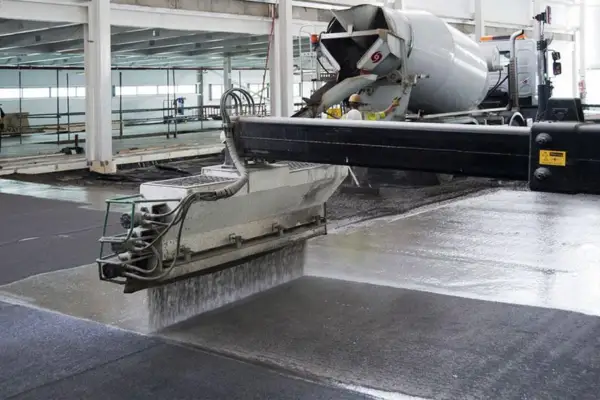
Industrial flooring is usually poured in large slabs, which means shrinkage stress builds up across wide surface areas right from the start. Add constant forklift traffic, rack loading, and vibration from heavy machinery, and joints — the weakest point in any slab — start deteriorating far faster than the concrete itself would suggest. Traditional welded wire mesh helps with some structural demands, but it sits at a fixed depth within the slab, leaving the surface zone unprotected from the shrinkage cracking that actually starts most flooring problems.
How Our Fiber Range Solves This
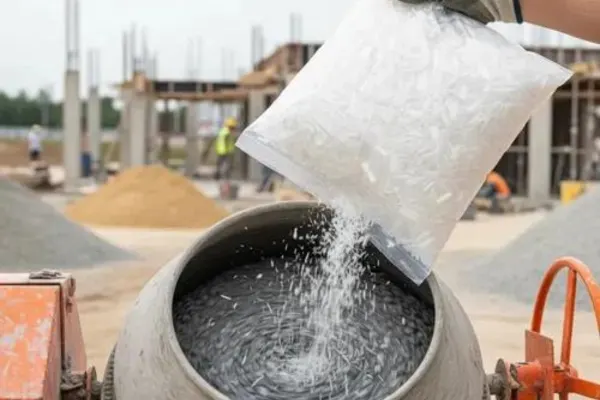
This is exactly where fiber reinforcement earns its reputation in the flooring world. Our PP Micro Fiber Manufacturer products disperse through the entire depth of the slab, controlling plastic shrinkage cracking during the vulnerable early curing period when industrial floors are most prone to surface cracking. For the ongoing structural demands of forklift and rack loading, our Concrete Reinforcement Fiber Manufacturer macro synthetic fiber range adds genuine toughness and post-crack load capacity — meaning the floor keeps performing structurally even if a crack does eventually form, rather than failing outright at that point.
Being completely non-corrosive also matters a great deal in industrial environments where chemical spills or moisture exposure are a regular occurrence — wire mesh in these conditions eventually corrodes and expands, actually accelerating crack formation from within the slab, which is a problem our fiber products simply don’t create.
Working With Warehouse and Factory Contractors
We regularly supply fiber reinforcement to contractors building warehouse floors, factory flooring, and logistics facility slabs, recommending dosage based on expected load type — whether that’s forklift traffic, static rack storage, or heavier machinery vibration. As India’s logistics and manufacturing sectors keep expanding, we’ve seen steady demand from contractors looking for a flooring reinforcement solution that holds up to daily industrial use without the corrosion concerns tied to steel mesh.
FAQ
Can fiber reinforcement fully replace steel mesh in industrial flooring?
In many industrial flooring applications, macro synthetic fiber can serve as a full structural alternative to welded wire mesh, though the final decision should factor in the specific load design of the project.
Does fiber reinforcement help with joint cracking in warehouse floors?
Yes, fiber reduces the fine shrinkage cracking that often initiates joint deterioration, though joint spacing and design still play an important role in overall floor performance.
Is fiber-reinforced flooring suitable for facilities with chemical exposure?
Yes, since polypropylene and synthetic fiber are fully non-corrosive, they hold up well in environments where chemical spills or moisture exposure would otherwise degrade steel-based reinforcement over time.