
What Role Does Fiber Reinforcement Play in Bridge and Flyover Construction?
Bridges and flyovers carry a level of structural responsibility that leaves almost no room for compromise. These are structures designed to perform for decades under constant vehicle loading, environmental exposure, and — in coastal or industrial regions — genuinely aggressive corrosion conditions.
As a Glass Fiber Manufacturer and Concrete Reinforcement Fiber Manufacturer, bridge and flyover construction represents some of the most demanding applications our fiber reinforcement products are specified for.
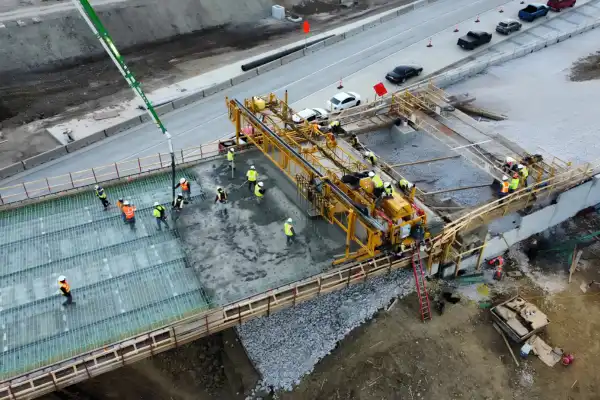
The Structural Challenges Bridges and Flyovers Face
The decks of bridges and flyovers encounter loads arising due to the movement of vehicles, thermal changes in long stretches, and, based on their geographical locations, the possibility of flood due to monsoons, salty coastal winds, and industrial pollution. Although conventional steel reinforcement performs satisfactorily under normal stresses, its disadvantage is one which is quite well known: corrosion. Moisture penetrating into cracks formed in the surface and reacting with the internal steel leads to rusting, causing more cracks and eventually leading to the disintegration of the structure.
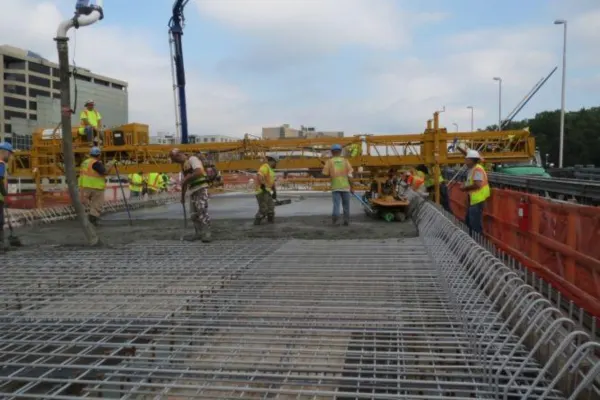
How Fiber Reinforcement Supports Bridge and Flyover Durability
This is precisely where our fiber range adds long-term value. Our Macro Synthetic Fiber Manufacturer products contribute genuine post-crack toughness to structural concrete elements, helping bridge decks and flyover sections maintain load-carrying capacity and resist fatigue cracking under sustained traffic loading. For applications involving precast bridge elements or architectural cladding on flyover structures, our E-Glass Fiber Manufacturer and Alkali Resistant Glass Fiber ranges bring tensile reinforcement into thin precast sections without introducing any corrosion risk whatsoever.
Because our fiber products are entirely non-metallic, they eliminate the corrosion-driven deterioration cycle that shortens the service life of so many bridge structures, particularly in coastal regions or areas with high industrial pollution. This is a meaningful advantage for infrastructure planners thinking in terms of decades-long service life and reduced maintenance intervention on structures that are genuinely difficult and costly to access for repair once in service.
Working With Infrastructure Contractors on Bridge Projects
We supply fiber reinforcement to contractors and infrastructure developers working on bridge and flyover projects, providing the technical documentation and consistent batch quality that structural applications of this nature require.
Given the engineering scrutiny bridge projects typically involve, our role as an actual manufacturer — controlling raw material and production quality directly — matters considerably more here than in less demanding applications.
FAQ
Can fiber reinforcement replace steel rebar in bridge deck construction?
No, fiber reinforcement works alongside primary steel reinforcement in bridge structures — it adds secondary crack control and post-crack toughness rather than replacing the primary structural steel needed for a bridge’s load-bearing design.
Why is corrosion resistance particularly important in bridge and flyover projects?
Bridges and flyovers are difficult and expensive to access for repair once in service, so preventing corrosion-driven deterioration through non-metallic reinforcement helps reduce long-term maintenance costs and service disruptions.
Is glass fiber used in bridge construction, or only polypropylene fiber?
Glass fiber is typically used in precast bridge elements or architectural cladding requiring tensile strength in thin sections, while polypropylene and synthetic fiber are more commonly used in the main structural concrete for crack control and toughness.
Need technical guidance for a bridge or flyover construction project? Reach out through our enquiry page or explore our full product range at fiberwellindia.com.