
Why Is Fiber Reinforcement Vital for Canals, Tanks, and Water Treatment Structures?
Water infrastructure asks something specific of concrete that most other applications don’t — it has to stay watertight, not just structurally sound. Canals, storage tanks, and treatment structures spend their entire service life in constant contact with water, which means even a hairline crack that would be cosmetically minor elsewhere becomes a genuine leakage and durability problem here.
As a PP Fiber Manufacturer and Concrete Reinforcement Fiber Manufacturer, water infrastructure is a sector where our fiber range directly addresses this watertightness challenge.
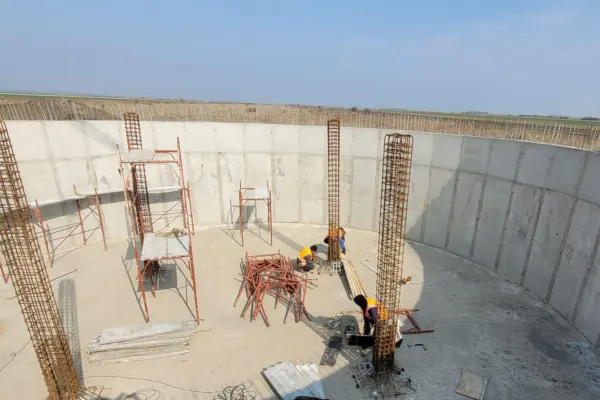
Why Water-Retaining Structures Are So Crack-Sensitive
Canals, tanks, and treatment structures are typically cast in large, continuous sections, which makes them highly prone to shrinkage cracking during curing — and once water infrastructure is in service, sustained water pressure and cyclical wetting and drying only widen any existing cracks over time. Unlike a slab or wall where a hairline crack is mostly a cosmetic concern, a crack in a canal lining or storage tank directly compromises the structure’s core function: holding water without loss. Steel reinforcement helps with structural strength but does nothing to prevent the fine shrinkage cracking that so often becomes the entry point for water infiltration and, eventually, steel corrosion from within.
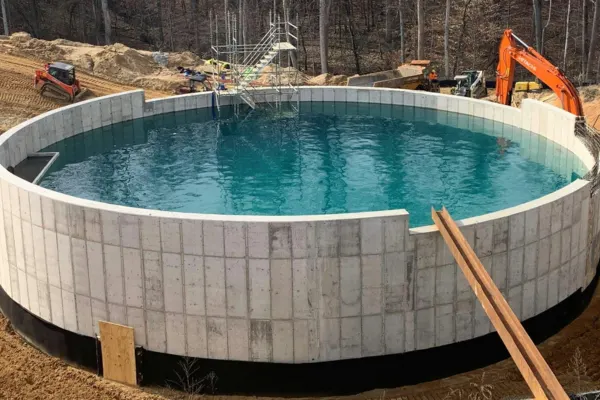
How Fiber Reinforcement Improves Watertightness
Our PP Micro Fiber Manufacturer range directly targets this problem, dispersing through the concrete mass to control plastic shrinkage cracking during curing — precisely the mechanism that creates the fine cracks water eventually finds its way through. For larger water infrastructure projects like canal linings and treatment plant structures, our Macro Synthetic Fiber Manufacturer products add structural toughness that helps these sections resist cracking under sustained hydrostatic pressure and ground movement over their service life. And because our entire fiber range is fully non-corrosive, there’s no risk of the rust-driven expansion that can crack water-retaining structures from the inside once moisture reaches embedded steel through even minor surface cracking.
Reduced cracking translates directly into reduced water loss and lower long-term maintenance costs — a genuinely significant consideration for public infrastructure projects like canals and treatment facilities, where repair access is often difficult and costly.
Supporting Water Infrastructure Contractors and Agencies
We supply fiber reinforcement to contractors and agencies working on canal construction, water storage tanks, and treatment plant infrastructure, recommending dosage based on the specific hydrostatic and structural demands of each project.
Public water infrastructure projects often carry strict quality documentation requirements, and as an actual manufacturer, we’re well positioned to support that level of consistency across large-volume, publicly funded contracts.
FAQ
Does fiber reinforcement actually improve water tightness in concrete structures?
Yes, by controlling the plastic shrinkage cracking that typically creates the earliest pathways for water infiltration, fiber reinforcement meaningfully reduces the risk of leakage in water-retaining structures.
Is fiber reinforcement suitable for canal lining applications?
Yes, particularly macro synthetic fiber for structural toughness combined with micro fiber for shrinkage control, both of which are well suited to large-scale canal lining work.
Can fiber reinforcement reduce long-term maintenance costs for water treatment structures?
Yes, since reduced cracking means less water infiltration and less corrosion-related deterioration over time, which typically lowers repair frequency and maintenance costs across the structure’s service life.