
What Makes 10mm Monofilament Polypropylene Fiber Ideal for Shrinkage Crack Control?
Have you ever poured a concrete slab that seemed to be flawless, only to return after some hours and discover that the slab is covered in a web of hairline cracks? That is what plastic shrinkage cracking is and is quite common in Indian constructions, especially during the hottest months of summer when surface water evaporates faster than concrete sets and develops strength. It’s one of those problems nobody notices until it’s too late to fix cheaply. As a PP Fiber Manufacturer, this is exactly the issue our 10mm monofilament polypropylene fiber was built to solve.
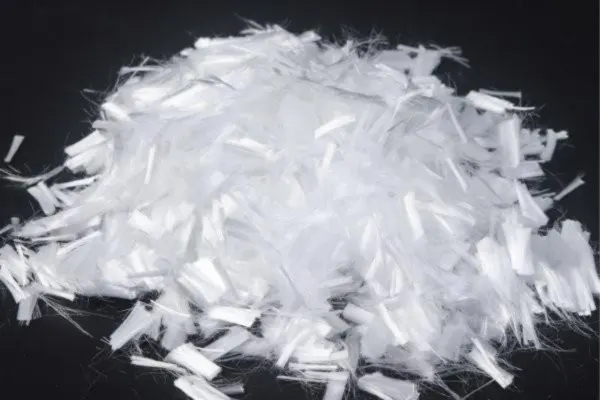
Here’s the basic idea. Monofilament fiber is a single, smooth, continuous strand — not twisted, not bundled, just one clean filament of polypropylene. And that very simplicity is also what makes it effective. As being just one strand, the fiber distributes throughout the concrete mass, creating an invisible web within. The moment the micro-crack attempts to appear, it encounters the fiber strand and stops immediately.
Product Overview
We manufacture this fiber from virgin PP micro fiber, no recycled polymer mixed in. That matters more than people assume — recycled polypropylene can vary batch to batch in melt behavior and tensile strength, and that inconsistency shows up on-site as clumping or uneven dispersion. As a PP Micro Fiber Manufacturer, we keep tight control over fiber diameter and length precisely so contractors don’t have to think twice about what they’re getting in each bag.
Technical Specifications
| Fiber Material | Macro Synthetic |
| Fiber Length | 10 mm |
| Application | Concrete |
| Dosage | 0.6 kg/m³ |
| Form | Monofilament |
| Tensile Strength | 550 MPa |
| Melting Point | 160°C |
Key Features
Even dispersion is really the whole story with this fiber. A single-strand design means it doesn’t clump the way some twisted fibers can at higher dosages, so you get fiber coverage everywhere in the mix — not just in patches. No corrosion risk either, which is a real plus over steel fiber in structures where cover might get compromised down the line. And because it’s not chasing structural strength the way a macro fiber does, it’s priced accordingly — a practical, no-frills option when shrinkage control is really all you need.

Recommended Dosage
Most standard applications call for 0.6–0.9 kg per cubic meter. If you’re pouring in peak summer heat, or the site has high evaporation exposure, bump it up toward 1 kg per cubic meter for extra insurance. That said, don’t treat these as fixed numbers — mix design, aggregate size, and curing method all shift the ideal dosage a bit, so it’s worth checking with our technical team before finalizing quantities.
Mixing Compatibility
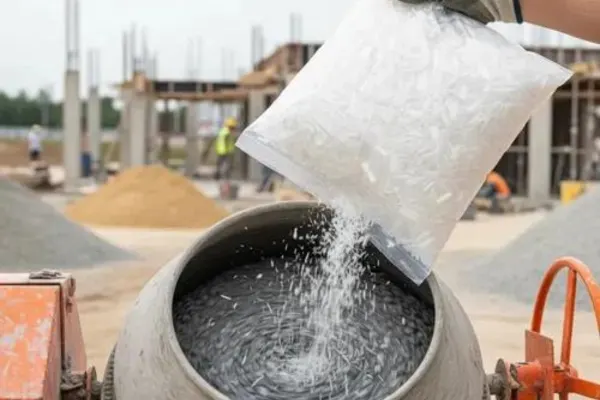
Works cleanly in ready-mix batching, site-mixed concrete, plaster, and screed work. No special dispersal equipment needed — just add it during the regular mixing cycle. It plays nicely with plasticizers, retarders, and curing compounds too, so it won’t complicate whatever admixture setup you’re already using.
FAQ
Does monofilament fiber stop structural cracking too, or just shrinkage cracks?
Mainly shrinkage and settlement cracks. If you’re dealing with structural load-bearing concerns, that’s really a job for macro synthetic fiber or conventional reinforcement instead.
When should this fiber go into the mix?
Right at the batching or mixing stage — same timing as your other admixtures — so it has time to disperse fully before the pour.
Does hot weather change how well this fiber performs?
Actually, hot weather is where it earns its keep. Faster surface moisture loss means higher shrinkage risk, and that’s exactly the scenario this fiber is designed for.
Want technical data sheets or a dosage recommendation for your specific project? Reach out through our enquiry page, or check the full range at fiberwellindia.com.