
How Does 10mm Twisted Polypropylene Fiber Compare to the 12mm Variant?
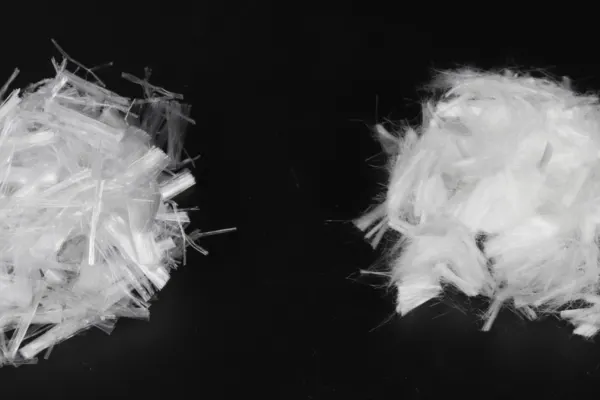
If 12mm twisted fiber is the choice for heavier structural demands, 10mm twisted polypropylene fiber sits just a step below it — offering the same mechanical anchoring advantage from the helical twist, but in a slightly shorter, easier-to-finish package. As a PP Fiber Manufacturer, we position this variant for contractors who want improved pull-out resistance over standard straight or monofilament fiber, but are working with slightly thinner sections or finish-sensitive surfaces where the full 12mm length might be a bit much.
The twisted profile works the same way it does in our 12mm version — the spiral surface forces the concrete matrix to grip the fiber along an uneven path, increasing resistance when a crack tries to pull it free. Dropping the length to 10mm just brings that benefit into applications where a shorter fiber suits the section thickness better.
Product Overview
Manufactured from virgin PP micro fiber, this fiber has its twist introduced during extrusion, keeping it stable and consistent through mixing and placement. As an experienced PP Micro Fiber Manufacturer, we hold twist frequency and diameter to tight tolerances here too, since the mechanical benefit of a twisted fiber depends entirely on getting that geometry right batch after batch.
Technical Specifications
| Fiber Structure | Twisted |
| Brand | Fiberwell |
| Alkali Resistance | Standard |
| Fiber Length | 10 mm |
| Tensile Strength | 550 MPa |
| Melting Point | 160°C |
| Size Classification | Macro |
| Density | 0.9 g/cm3 |
Key Features
This fiber gives you the anchoring benefit of the twisted design in a slightly more finish-friendly length, making it a solid fit for slabs, screeds, and moderate-traffic flooring where you still want better crack-bridging than a plain monofilament fiber offers. It disperses reasonably well through the mix, though — like its 12mm counterpart — it benefits from a touch more mixing attention at higher dosages compared to smooth straight fiber. It’s fully non-corrosive and holds up indefinitely against the alkaline conditions inside cured concrete.

Recommended Dosage
For general slab and flooring work needing enhanced crack resistance, 0.8–1.1 kg per cubic meter is a reasonable starting range. For higher-traffic or industrial applications, dosage can move up toward 1.3 kg per cubic meter, though we’d always suggest confirming with our technical team given how the twist geometry can shift ideal quantities compared to straight fiber.
Mixing Compatibility
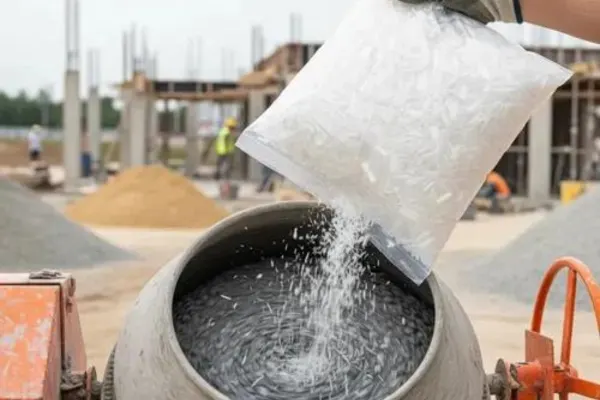
Compatible with ready-mix concrete, site-batched concrete, and precast applications. A slightly longer mixing cycle at higher dosages helps ensure full dispersion, and it works fine alongside standard admixtures like plasticizers and curing agents.
FAQ
Why choose 10mm twisted fiber instead of 12mm?
It’s a better fit for thinner slabs or finish-sensitive applications where the extra 2mm of the 12mm variant might affect surface smoothness, while still offering the same anchoring benefit.
Does the shorter length reduce the mechanical anchoring effect?
Not significantly — the twist itself is what creates the anchoring benefit, so 10mm still performs well, just across a slightly shorter crack-bridging span than the 12mm version.
Is this fiber suitable for precast applications?
Yes, it’s a reasonable option for precast elements needing more than basic shrinkage control without moving up to a full macro synthetic fiber.
Need help deciding between the 10mm and 12mm twisted variants for your project? Reach out through our enquiry page or check the full range at fiberwellindia.com.