
How Does 8×8mm Polypropylene Mesh Strengthen Fine Plaster and Render Work?
Not every crack-control problem calls for loose chopped fiber. Sometimes what a wall or thin render layer actually needs is a continuous grid structure holding the surface together — and that’s exactly what our 8×8mm polypropylene mesh delivers. As a Fiber Mesh Manufacturer, this is the tightest grid size in our polypropylene mesh range, purpose-built for fine plaster coats, skim
finishes, and thin render applications where a dense mesh pattern provides more consistent, uniform crack resistance than dispersed fiber alone.
In other words, it can be compared to sprinkling the reinforcement throughout the mix randomly or laying it down systematically in such a way that it covers all the places on the surface where cracks can form. The latter method is generally more effective for thinner layers of material.

Product Overview
Manufactured as part of our Fiber Mesh Manufacturer range, our 8×8mm polypropylene mesh is woven to a tight, consistent grid pattern using durable polypropylene strands. This tight grid spacing makes it especially well suited to fine plaster and skim coat applications, where a wider mesh pattern might not provide enough surface coverage to prevent hairline cracking.
Technical Specifications
| Mesh Type | Multifilament |
| Weight Category | Lightweight |
| Mesh Size | 8 × 8 cm |
| Application | Inguinal Hernia |
| Pore Type | Microporous |
| Sterility | Sterile |
| Edge Type | Cut Edge |
Key Features
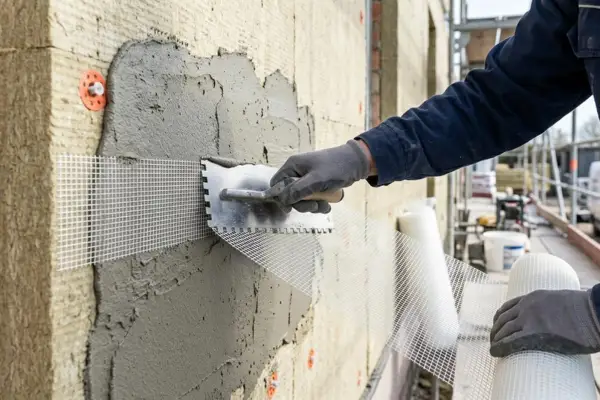
The tight 8×8mm grid spacing gives this mesh excellent surface coverage in thin applications, which matters a great deal in fine plaster and skim coat work where every square inch of the surface needs consistent crack protection. Being fully polypropylene, it’s completely resistant to corrosion and alkali degradation, so there’s no concern about the mesh breaking down inside the cementitious layer over time the way a metal mesh eventually might in a humid environment. It’s also lightweight and flexible enough to conform easily to slightly uneven wall surfaces without tearing or bunching during installation.
Recommended Dosage
Unlike chopped fiber, mesh is applied as a continuous embedded layer rather than measured by weight per cubic meter. For standard plastering and rendering projects, the mesh will normally be located inside the first coat and will then be fully encapsulated by a second skim coat. The correct location and coating thickness must be verified from our technical department according to your plaster system and substrate conditions.
Mixing Compatibility
It is suitable for use with conventional cement plaster systems, polymer-modified renders, and gypsum skim coats. The mesh is applied directly into the wet plaster coat while applying it, unlike other meshes that get mixed within the plaster mix. The mesh is compatible with all bonding materials.

FAQ
Is 8×8mm mesh better than chopped fiber for plaster crack control?
For thin, finish-critical plaster work, mesh often provides more consistent surface coverage than dispersed chopped fiber, though the right choice depends on the specific application and finish requirement.
How is polypropylene mesh installed in plaster work?
It’s embedded directly into the first plaster coat while still wet, then covered with a subsequent skim or finish coat to fully encapsulate the mesh.
Does this mesh work on uneven or textured wall surfaces?
Yes, its lightweight, flexible construction allows it to conform to mildly uneven surfaces without tearing, though very rough substrates may need surface preparation first.
Need guidance on mesh selection or installation for a plaster or render project? Reach out through our enquiry page or check the full range at fiberwellindia.com.